
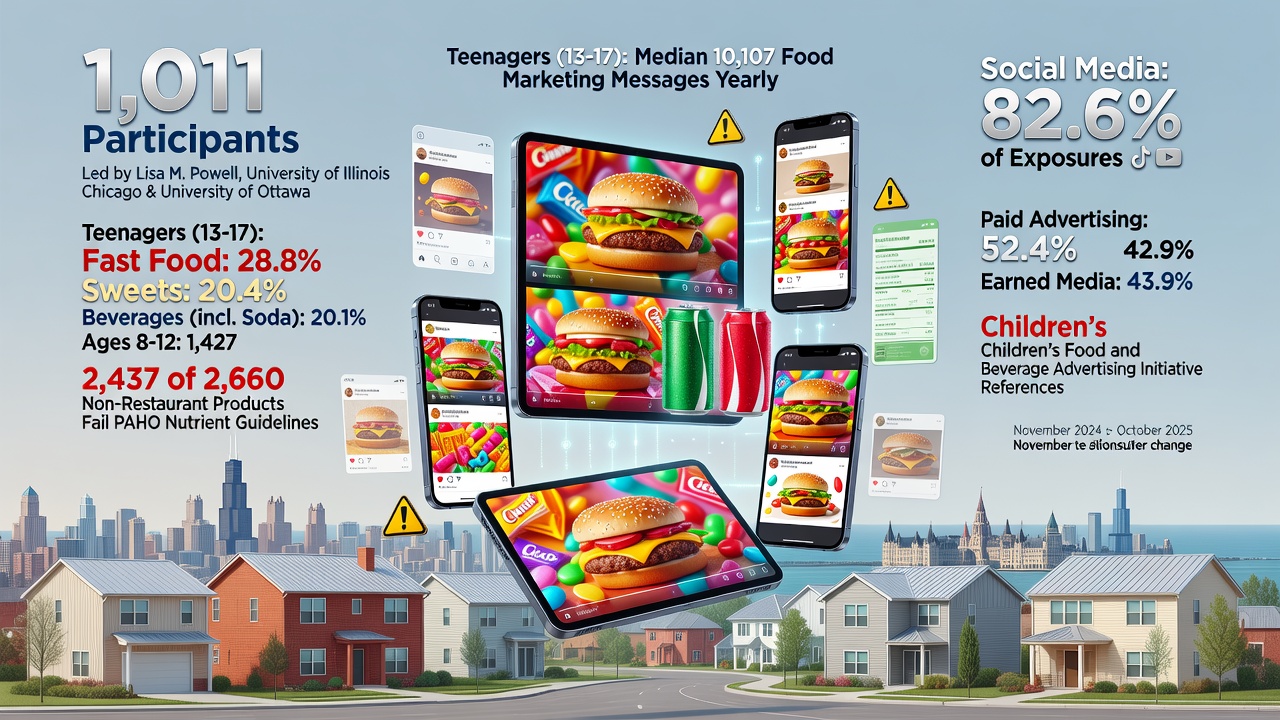
A cross-sectional study of 1,011 American children and teenagers found that young people encountered a heavy volume of food marketing on their phones and tablets, and that most of the promoted products did not meet nutrition guidelines. The research, led by Lisa M. Powell with teams from the University of Illinois Chicago and the University of Ottawa, adds real-world data to a debate over how digital advertising reaches minors.
How the Study Measured Exposure
Between November 2024 and October 2025, researchers recorded real-time video from participants' devices and collected questionnaires from young people aged 8 to 17. Participants reported using a smartphone or tablet for an average of 3.7 hours a day outside of school and homework. The team counted food marketing messages and classified the products using the Pan American Health Organization's nutrient profile model.
Teenagers aged 13 to 17 had a median of 10,107 food marketing messages a year, while children aged 8 to 12 had a median of 1,427. Girls and young people whose parents or guardians did not have a college degree had higher exposure levels.
What Was Being Promoted
Fast food was the most common category, making up 28.8 percent of the products observed. Sweets accounted for 20.4 percent, and beverages for 20.1 percent, with soda the leading drink. Of the 2,660 non-restaurant food products the researchers analyzed, 2,437 did not meet the Pan American Health Organization's nutritional guidelines.
The study does not show whether these products were bought or whether they changed children's diets, so the nutritional findings describe exposure rather than consumption.
Which Platforms and Promotion Methods Mattered Most
Social media made up 82.6 percent of the 5,154 recorded exposures, with TikTok at 30.4 percent and YouTube at 22.6 percent. Paid advertising accounted for 52.4 percent of exposures, while 43.9 percent came from earned media, such as content shared without a direct paid placement. Owned media made up the remaining 3.7 percent.
Nearly half of the marketed items came from companies participating in the Children's Food and Beverage Advertising Initiative, an industry self-regulatory program. The researchers said that brand-related material often looks like ordinary social media content rather than traditional advertising, which may make it harder for young viewers to recognize.
Limits and What Comes Next
Powell said the totals may be underestimates because the study captured only smartphones and tablets and excluded messaging apps. Some participants may also have changed how they used the internet while being recorded. Because the study was observational, it does not prove that companies targeted specific children, though it documents how much food marketing young people see. The authors argue that these results could inform policies aimed at protecting minors from promotion of unhealthy products, particularly given how much exposure comes from unpaid and self-regulated sources.